
What Makes a Website Scalable – and Why It Matters as You Grow
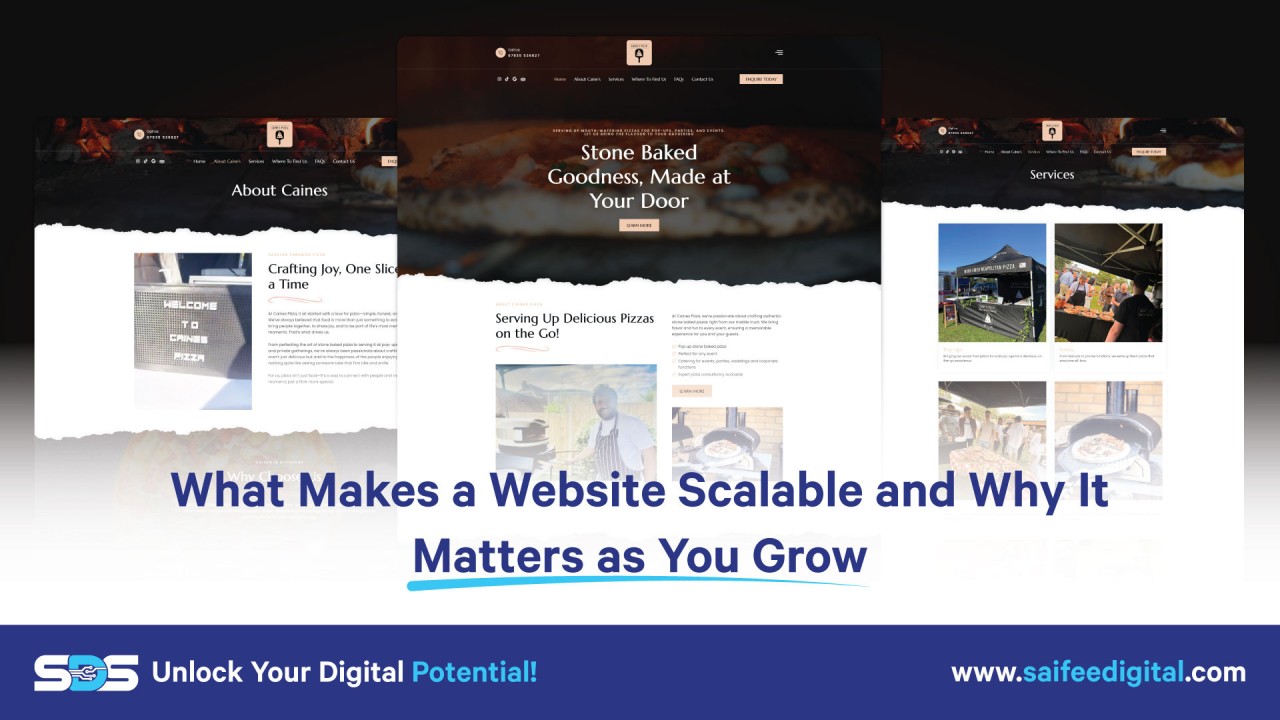
A scalable website isn’t just about handling more traffic. It’s about building a high-performance, future-proof foundation that grows with your business—without needing a full rebuild every time you expand.
A well-built, scalable website supports performance, user experience, and long-term growth, ensuring your digital presence evolves alongside your business.
In this article, we’ll outline how to ensure your website is built to scale from day one, saving time, cost, and unnecessary technical challenges.
1. Clean, Modular Codebase
Scalability starts with how your website is built. A clean, modular codebase—whether using WordPress, Laravel, or a headless CMS—allows new features to be added without disrupting core functionality.
This approach ensures your website remains stable, maintainable, and easy to expand as your requirements grow.
Tip: Avoid bloated themes and excessive plugins. While they may offer short-term convenience, they often lead to slow performance, conflicts, and long-term maintenance issues.
2. Flexible and Structured Backend
A scalable website requires a well-structured and flexible backend. If your system is rigid or overly complex, scaling becomes inefficient and costly.
A properly built backend allows you to:
-
Add new pages and features without technical friction
-
Update functionality without breaking existing elements
-
Integrate seamlessly with third-party tools and systems
This ensures your website remains adaptable as your business evolves.
3. Reliable Hosting and Infrastructure
Your hosting setup plays a critical role in scalability. Basic shared hosting may support a simple brochure website, but it will struggle as traffic and functionality increase.
A scalable website should include:
-
Cloud or VPS hosting capable of handling traffic growth
-
Content Delivery Network (CDN) integration for faster load times
-
Caching and database optimisation for performance
-
A tested backup and recovery system to protect your data
This ensures your website remains fast, secure, and reliable under increasing demand.
4. Built to Evolve with Your Business
A scalable website should support your long-term strategy—not limit it. As your business grows, your website should be able to adapt without requiring redevelopment.
This includes:
-
Expanding into new services or markets
-
Supporting multilingual or multi-region setups
-
Integrating with CRMs, marketing tools, booking systems, and automations
A future-ready website allows you to scale efficiently without unnecessary redevelopment costs.
If you’re planning to grow your business, your website needs to be built with that growth in mind.
Scalability isn’t a feature—it’s a fundamental approach to website design and development. Businesses that invest in scalable, high-performance websites from the start are better positioned to grow without limitations.
More Insights
Why Website Speed Affects Your Google Ranking and How to Fix It